
How a Sealed Crawl Space Protects Your Home From Moisture & Pests
Understanding Your Home’s Foundation
When most people think about home maintenance, they focus on the parts of the house they see every day, such as the roof, siding, and landscaping. However, what happens underneath your living space is just as important. Traditional crawl spaces are often vented to the outside, allowing outside air, humidity, and ground moisture to enter freely. Unfortunately, this design can invite a host of problems, including mold growth and structural decay. By opting to seal your crawl space, you can create a controlled environment that safeguards your entire property.
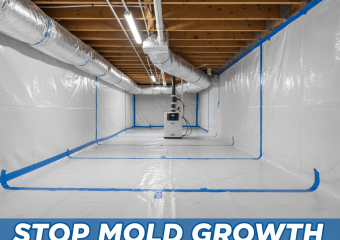
[IMAGE: A clean, well-sealed crawl space featuring a heavy-duty vapor barrier and bright lighting.]
Moisture is one of the most destructive forces a house can face. When humidity builds up beneath your floors, it creates a breeding ground for wood rot, fungi, and musty odors that eventually seep into your living areas. Beyond water damage, damp environments act as a beacon for uninvited critters. Taking proactive steps to fortify this neglected zone is essential for long-term home preservation.
The Connection Between Moisture and Pests
It is no coincidence that damp areas often suffer from heavy infestations. Many common household intruders thrive in wet conditions. Termites, carpenter ants, silverfish, and rodents actively seek out damp wood and high-humidity atmospheres. When wood framing absorbs moisture, it softens, making it much easier for wood-destroying insects to chew through and compromise your structural integrity.
Furthermore, mold and mildew feed on organic debris found in wet, dark settings, providing an ongoing food source for various small bugs. When you control the humidity levels under your house, you strip away the exact elements that pests need to survive and multiply. Without standing water, condensation, or rotting materials, your home becomes vastly less appealing to invaders.
How Crawl Space Encapsulation Works
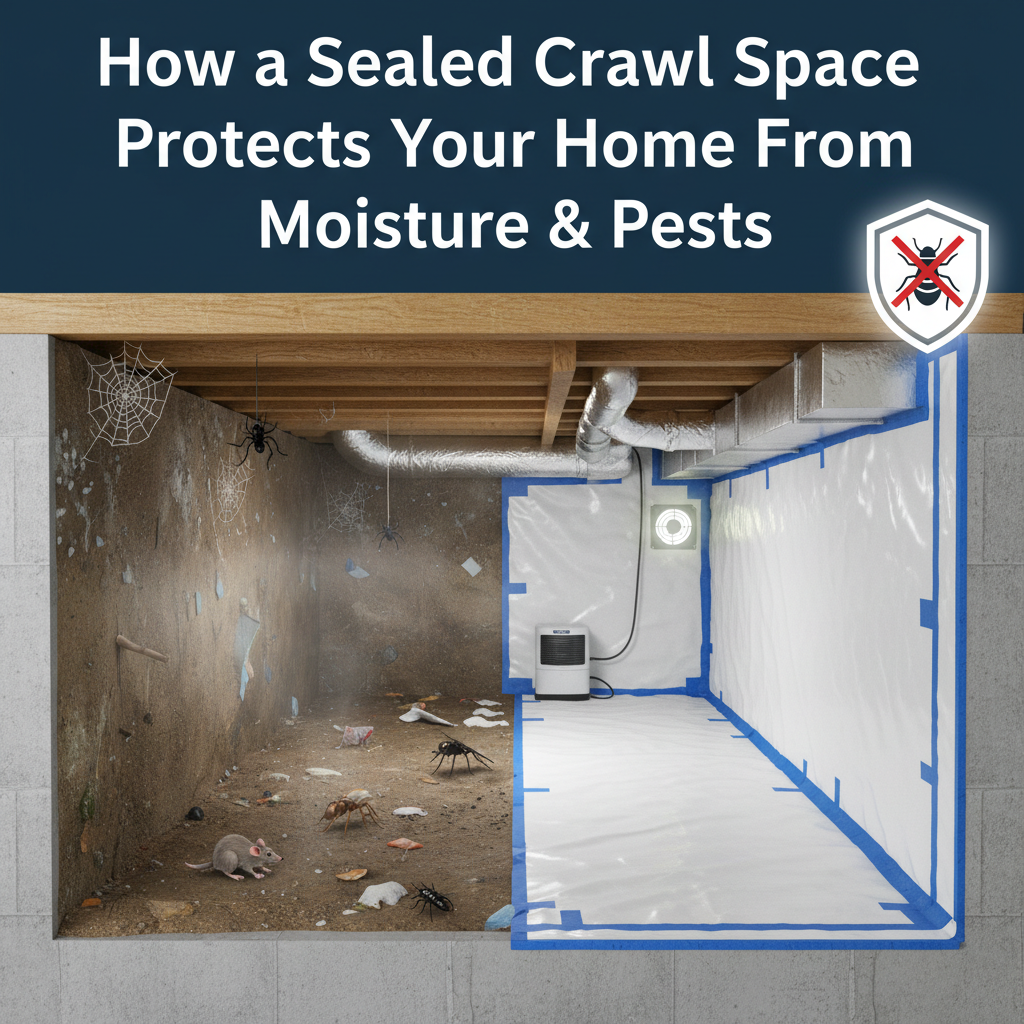
Crawl space encapsulation is a comprehensive process designed to isolate the area from the earth and outside air. Instead of letting outside elements flow freely underneath your floorboards, professionals transform the space into a clean, dry zone.
[IMAGE: Professional technician installing a heavy-duty polyethylene vapor barrier in a crawl space.]
- Vapor Barrier Installation: Heavy-duty polyethylene sheeting is laid across the dirt floor and up the foundation walls to block ground moisture completely.
- Sealing Vents and Gaps: Open vents and tiny cracks are tightly sealed to stop outside humid air and crawling insects from entering.
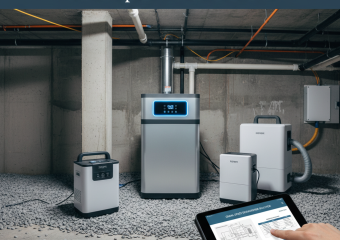
- Dehumidification: A dedicated crawl space dehumidifier is often installed to regulate relative humidity and keep the air dry year-round.
Key Benefits of a Sealed Foundation
Investing in encapsulation yields advantages that extend far beyond simple bug control. Because a significant portion of the air you breathe inside your home originates from the basement or crawl space, cleaning up the lower level directly enhances your indoor air quality. You will notice fewer allergens, less dust, and an end to those stubborn musty smells.
Additionally, a sealed foundation boosts energy efficiency. Sealing off drafts prevents cold winter air and hot summer humidity from altering your floors’ temperature, taking the strain off your HVAC system. Ultimately, protecting your foundation translates to higher property value and peace of mind.
Long-Term Maintenance and Protection
Once your crawl space is properly sealed, upkeep becomes remarkably straightforward. Routine visual checks ensure that the vapor barrier remains intact and that your dehumidifier is operating smoothly. By taking care of the hidden spaces beneath your feet, you invest in a healthier, stronger, and more resilient home for years to come.