

Stop Mold Growth with Crawl Space Encapsulation
When thinking about home maintenance, the dark and dusty area beneath your floors is rarely top of mind. However, neglecting this hidden zone can lead to severe structural issues and health hazards throughout your entire household. Moisture naturally accumulates in unsealed foundations, creating a breeding ground for fungi and mildew. Understanding how crawl space encapsulation can help prevent mold in your home is essential for maintaining a safe, healthy living environment.
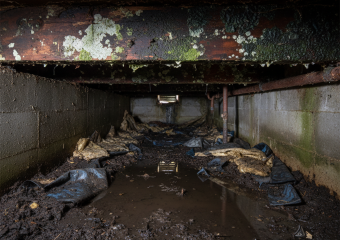
[IMAGE: A dark, damp unsealed crawl space showing signs of moisture and mold growth.]
Understanding the Problem: Why Crawls Spaces Attract Moisture
The ground beneath your house is rarely dry. Soil continuously releases moisture upward through evaporation. In a traditional vented setup, outside air enters through foundation vents, bringing humidity with it. When warm summer air meets the cool surfaces of your floor joists and subfloor, condensation forms. This constant supply of moisture creates an ideal habitat for spores to thrive.
Health and Structural Risks
Fungus does not just stay confined to the dirt floor. As it grows, it releases microscopic spores into the air. Due to the stack effect—a natural phenomenon where warm air rises inside a building—air from your foundation is continuously pulled up into your living spaces. Breathing in these spores can trigger allergies, asthma attacks, and other respiratory issues. Furthermore, wood-decaying fungi can weaken your floor joists, threatening the structural integrity of your property.
What is Crawl Space Encapsulation?
Encapsulation is a comprehensive waterproofing method designed to isolate your foundation from the surrounding earth and outside air. Instead of letting outside elements freely enter, the space is sealed completely airtight and watertight.
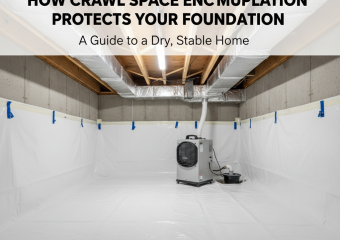
[IMAGE: A professionally encapsulated crawl space featuring heavy-duty vapor barrier and bright clean lighting.]
Key Components of the Process
A proper encapsulation project involves several critical steps to ensure total moisture control:
- Heavy-Duty Vapor Barrier: A thick, durable polyethylene liner is laid across the dirt floor and up the foundation walls to block moisture vapor entirely.
- Sealing Vents and Openings: All exterior vents, gaps, and cracks are sealed tightly to prevent humid outside air from infiltrating.
- Sump Pump Installation: If water pooling is an issue, a sump pump with a French drain system is installed to remove liquid water proactively.
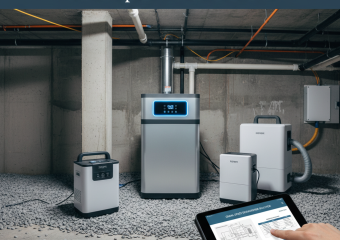
- Dehumidification: A commercial-grade dehumidifier is often added to regulate relative humidity levels and maintain a dry atmosphere year-round.
How Crawl Space Encapsulation Stops Mold in Its Tracks
By cutting off the primary sources of moisture and humidity, encapsulation starves fungi of the water they need to survive. Without moisture, existing spores remain dormant, and new colonies cannot form. Furthermore, regulating the relative humidity prevents condensation from gathering on wooden beams. This protective barrier safeguards both your family’s health and your home’s financial value.
Long-Term Benefits Beyond Mold Prevention
While stopping unwanted fungus is a primary goal, sealing your foundation offers numerous additional advantages. Homeowners often notice improved indoor air quality, reduced allergy symptoms, and lower energy bills. Because floors are no longer sitting over a damp, freezing pit, your HVAC system does not have to work nearly as hard to regulate indoor temperatures. Additionally, sealing out moisture deters pests like termites, rodents, and ants that thrive in damp environments.
Protect Your Investment Today
Your house is likely your most significant financial investment, and protecting it requires looking after every square foot, even the ones you rarely see. Taking proactive steps to seal your foundation transforms a neglected, damp hazard into a clean, dry zone. By investing in encapsulation, you ensure a healthier living space, protect your structural woodwork, and gain lasting peace of mind.