
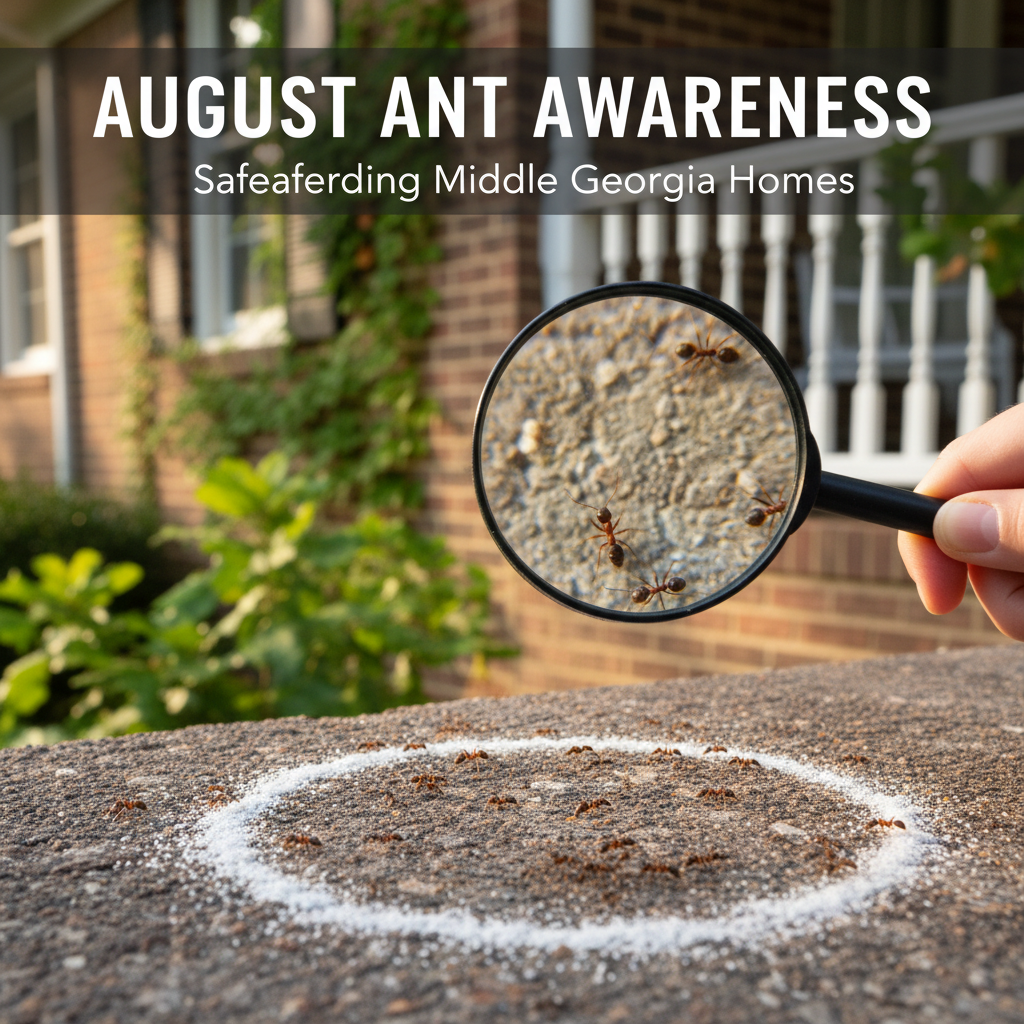
August Ant Awareness: Safeguarding Middle Georgia Homes
August Ant Awareness: Safeguarding Middle Georgia Homes from Infestations
As August arrives, so does a heightened awareness for a common household nuisance: ants. In Middle Georgia, the warm, humid climate creates ideal conditions for various ant species to thrive, making August a peak month for ant activity and infestations. This isn’t just about a few stray ants; it’s about understanding the threat these tiny invaders pose to your home and taking proactive steps to protect your property and family. From pantry raids to structural damage, ants can be more than just a minor annoyance, especially in our region where they are particularly active during the summer months.
[IMAGE: A close-up of ants trailing across a kitchen counter towards a food crumb.]
Why August is Peak Ant Season in Middle Georgia
Ants are social insects, and their colonies become particularly active in the warmer months as they forage for food to support their growing numbers. August, with its consistent warmth and longer daylight hours, provides optimal conditions for ants to expand their colonies and seek out new food and water sources. This increased activity often leads them directly into our homes, turning what was once an outdoor issue into an indoor invasion. Furthermore, August often coincides with the mating season for many ant species, leading to increased activity both indoors and outdoors as males and queens establish new colonies.
Common Ant Invaders in Middle Georgia
Middle Georgia is home to several ant species, each with its own habits and potential for causing problems. Identifying the type of ant you’re dealing with is the first step toward effective control.
Fire Ants
Perhaps the most notorious ant in Georgia, fire ants are known for their aggressive behavior and painful stings. They build visible mounds outdoors, often in lawns and landscaped areas. Disturbing a fire ant mound can result in dozens of ants swarming and stinging, posing a significant threat to children, pets, and individuals with allergies.
Carpenter Ants
These larger ants, often black or red-and-black, don’t eat wood but excavate it to create nests, which can lead to structural damage over time. They prefer moist, decayed wood, and their presence can indicate a moisture problem in your home. You might find sawdust-like debris near their entry points.
Argentine Ants
Small and dark brown, Argentine ants are known for forming massive colonies and can quickly overrun a home in search of food, especially sugary items. They often create heavy trails along walls and counters. As temperatures cool in the fall, Argentine ants are particularly prone to invading homes seeking warmth.
Odorous House Ants
These small, dark brown or black ants emit a foul, coconut-like odor when crushed. They are attracted to sweet foods and moisture, commonly found in kitchens and bathrooms.
[IMAGE: A diagram showing common entry points for ants into a house, such as cracks in the foundation, gaps around windows, and utility line openings.]
Preventing Ant Infestations: Your First Line of Defense
Prevention is key to keeping your Middle Georgia home ant-free. A proactive approach can significantly reduce the likelihood of an infestation.
Seal Entry Points
Ants can squeeze through incredibly tiny cracks and gaps. Inspect your home’s exterior for any openings around doors, windows, and the foundation. Seal these with caulk or weatherstripping to block their access.
Maintain Impeccable Cleanliness
Food and water are primary attractants for ants. Keep your kitchen and dining areas meticulously clean. Wipe down surfaces, sweep floors regularly, and clean up spills immediately. Store all food, including pet food, in airtight containers.
Address Moisture Issues
Ants are drawn to moisture. Fix any leaky pipes, faucets, or drainage issues. Reduce excess moisture indoors and around crawl spaces. Avoid leaving damp towels or sponges out.
Outdoor Maintenance
Keep shrubs, trees, and other vegetation trimmed away from your home’s foundation and walls. Ants can use these as bridges to gain entry. Also, keep mulch, pine straw, and branches away from the house and ensure outdoor trash cans have tight-fitting lids.
When to Call the Professionals
While DIY methods can help with prevention and minor issues, severe or persistent ant infestations often require professional intervention. Professional pest control services in Middle Georgia, like those offered by local experts, have the knowledge and tools to identify the specific ant species, locate colonies, and implement targeted treatments. They can use a combination of baits, barrier treatments, and colony-specific methods to ensure long-term control.
Attempting to treat a large infestation yourself, especially with sprays, can sometimes make the problem worse by causing ants to scatter and create new colonies. For carpenter ants, which can cause structural damage, or fire ants, which pose health risks, professional help is highly recommended.
[IMAGE: A pest control technician applying an exterior barrier treatment around the foundation of a home.]
Conclusion
August Ant Awareness Month serves as a crucial reminder for Middle Georgia homeowners to be vigilant against ant infestations. By understanding the common ant species in our area, implementing preventative measures, and knowing when to seek professional assistance, you can effectively protect your home. Don’t let these tiny pests take over your living space; take action now to ensure a comfortable and ant-free environment.